
Lead Qualification Explained: Why Most Leads Go to Waste?

Most businesses lose good leads before sales even gets a chance. Here is why that happens, and how the right process fixes it for good.
Author
outservepro@gmail.com
Category
Sales, Marketing
Table of Contents
Introduction
Every business chases more leads. Very few stop to ask what happens to the leads they already have. A form gets filled, a phone rings, a chat window lights up, and then, more often than anyone likes to admit, nothing happens next. The lead sits in a spreadsheet, gets a single follow up email, and quietly disappears.
This is not a lead generation problem. It is a qualification problem, and it is one of the most expensive mistakes a growing business can make.
Companies that qualify leads properly convert them at nearly four times the rate of those that do not, which means the same marketing budget can produce very different results depending on what happens after the lead comes in, not before it.
What Lead Qualification Really Means?
Lead qualification is the process of figuring out which leads are actually worth pursuing before sales spends time on them. Not every person who fills out a form is ready to buy, Whether those leads come through inbound or outbound channels, qualification separates the people who are genuinely close to a purchase from the people who were just browsing.
Done properly, qualified leads convert at roughly 40%, compared to just 11% for leads that never went through any real screening. That is nearly four times the outcome, from the exact same starting pool of leads. The difference is not the traffic. It is what happens the moment someone raises their hand.
Why So Many Leads Are Lost Before Sales Even Sees Them?
At OutServePro, we’ve found that the biggest issue is rarely a lack of leads. More often, businesses don’t have a consistent system for deciding who should be contacted first. This lines up with broader research too, only around 40% of companies apply any consistent qualification criteria at all, and the rest either judge leads randomly or, more commonly, treat every single lead the same way regardless of intent.
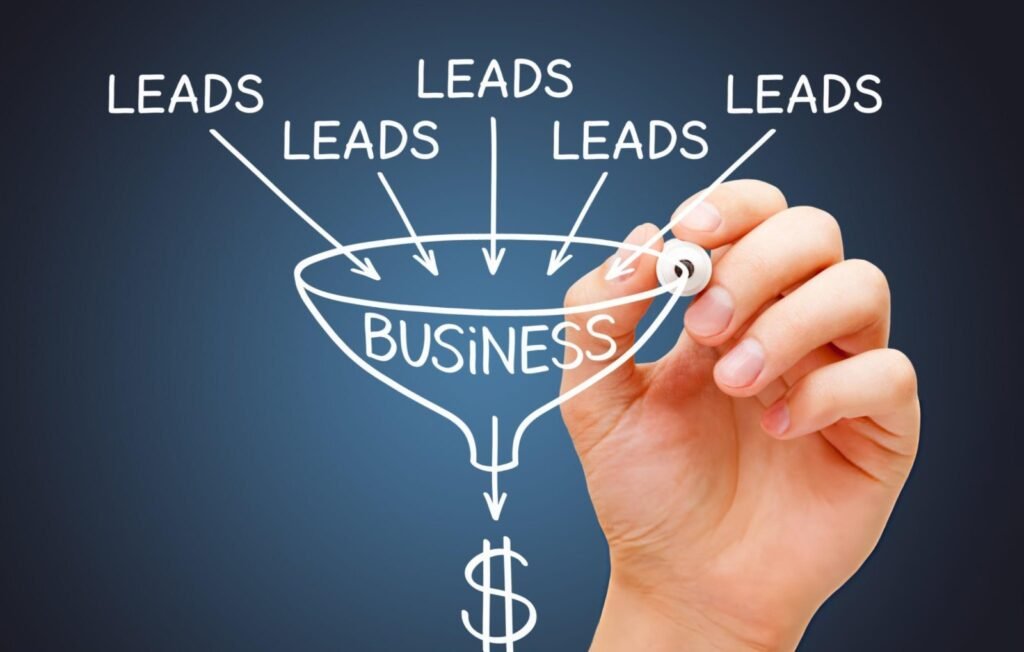
The result is what we see again and again with new clients. High-intent prospects end up waiting alongside people who were only browsing, and by the time sales reaches out, many have already chosen another provider. Roughly 55% of leads end up inadequately assessed or completely ignored industry wide, not because they were bad leads, but because nobody had a clear system to sort them.
A lead that could have closed within the month sits in the same queue as someone who was never going to buy, and by the time anyone gets around to it, the opportunity is gone.
The Speed Problem Nobody Talks About
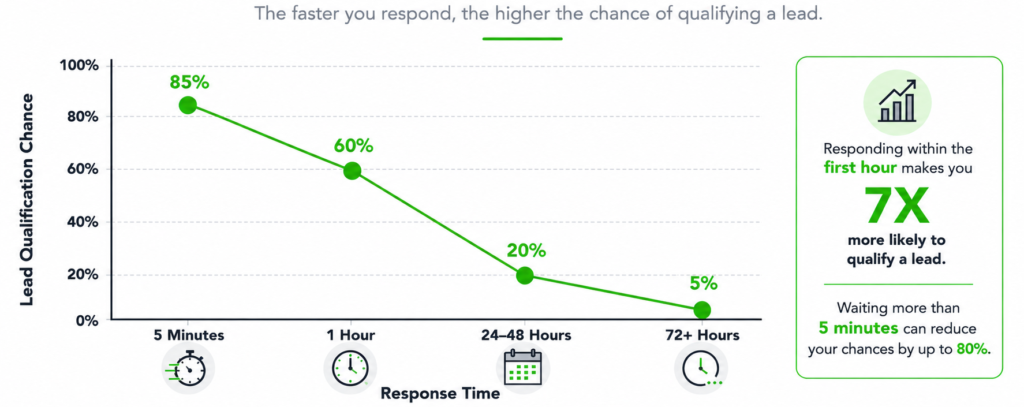
Qualification is not just about who you contact. It is about how fast you contact them. The average B2B response time to a new lead is around 42 hours. Meanwhile, a lead that gets a response within the first hour is roughly seven times more likely to actually qualify. Wait past the first five minutes, and the odds of ever qualifying that lead can drop by as much as 80%.
This single gap explains why two businesses can generate the exact same leads from the exact same campaign and end up with completely different results. One responds while the interest is still fresh. The other responds once the prospect has already moved on to a competitor, or simply lost interest entirely.
What Good Qualification Actually Looks Like?
Imagine two businesses each generate 100 leads from the same Google Ads campaign. The first contacts every lead in the order they arrive. The second scores each lead based on budget, urgency, and buying intent before assigning it to sales.
Although both generated the same number of leads, the second business closes more deals because high-intent prospects receive immediate attention while lower-priority leads enter a nurturing sequence.
Strong qualification is not about adding more steps or making the sales process harder. It is about asking the right questions early, so time is only spent on people who genuinely fit.
A widely used framework called BANT looks at four things before a lead ever reaches a serious sales conversation.
- Budget: Can this person or company realistically afford the solution being discussed?
- Authority: Are they the person who makes the final decision, or at least heavily influences it?
- Need: Does the problem they described actually match what is being offered?
- Timeline: Are they looking to solve this now, or six months from now?
Opportunities that are properly qualified using structured criteria like this close at rates roughly 33% higher than those handled without any framework at all. It is a simple filter, but very few businesses apply it consistently.
Quality Is the Actual Challenge, Not Quantity
61% of companies say generating high quality leads, not just more leads, is their single biggest challenge. That number says a lot. Most businesses are not struggling to attract attention. They are struggling to figure out which of those people are worth their time once attention has been captured.
This shows up clearly in the funnel numbers too. On average, only about 31% of leads become marketing qualified, and from there, only around 13% move on to become sales qualified. That is a steep drop at every stage, and each drop represents leads that were either never properly assessed or were followed up with too late to matter.
Signs Your Business Has a Qualification Problem
A few patterns tend to show up when qualification is broken, even if lead volume looks healthy on paper.
- Sales complains that most leads are not a good fit, despite marketing hitting its lead targets every month.
- Follow up happens once, sometimes twice, and then leads simply stop being contacted.
- There is no shared definition between marketing and sales of what actually counts as a qualified lead.
- Response times vary wildly depending on who happens to be free that day.
- The same leads get chased for weeks while newer, more promising ones sit untouched further down the list.
If even two or three of these sound familiar, the issue is rarely the marketing campaign itself. It is what happens, or does not happen, in the hours right after someone becomes a lead.

Why This Keeps Happening Even To Good Businesses?
It is rarely a lack of effort. Sales and marketing teams are usually busy, often overloaded, and qualification is the step that quietly gets skipped when everyone is focused on hitting weekly targets. Building a consistent scoring system, tracking response times, and following up with the right message at the right moment takes structure that most internal teams never get around to building, simply because there is always something more urgent on the calendar.
The businesses that get this right treat qualification as a system, not a task someone remembers to do when they have time. Every lead is scored the same way. Every lead gets a fast, defined response. Every lead is routed based on how ready it actually is to buy, rather than the order it happened to arrive in.
How OutServePro Turns More Leads Into Customers?
This is exactly where working with a dedicated digital marketing agency changes the outcome. At OutServePro, lead qualification is not an afterthought bolted onto a lead generation campaign. It is built into the process from the very first click.
Every lead brought in through our campaigns, whether it comes from search, paid ads, or social channels, is assessed against clear criteria before it ever reaches a client’s sales team. That means fewer wasted conversations, faster response times, and a pipeline built almost entirely from people who genuinely fit what the business offers.
The difference is not working harder on more leads. It is refusing to let good leads slip through the cracks because nobody had the time, system, or discipline to catch them in time.
Frequently Asked Questions
What is the difference between a lead and a qualified lead?
A lead is simply someone who showed some initial interest, such as filling out a form or clicking an ad. A qualified lead has been checked against specific criteria, such as budget, authority, need, and timeline, and shown to be a realistic potential customer, not just someone browsing.
How quickly should a new lead be contacted?
As close to immediately as possible. Response within the first hour dramatically increases the chance of qualifying a lead, while delays of even a few minutes can noticeably reduce it.
Does lead qualification slow down the sales process?
No, it speeds it up in practice. Sales teams spend far less time chasing people who were never going to buy, which means more time and energy goes toward leads that are actually close to a decision.
Can small businesses benefit from formal lead qualification?
Yes, arguably more than larger companies, since small teams cannot afford to waste hours on leads that were never going to convert. A simple, consistent qualification process protects limited time and resources.
Why do so many qualified leads still fail to convert?
Usually because of slow follow up or inconsistent criteria applied after the fact. Qualification only works when it happens early and is applied the same way to every single lead, not just the ones that happen to look promising.
Does lead qualification apply the same way to every industry?
The core idea stays the same, but the criteria shift. A B2B service with a long sales cycle needs to weigh authority and timeline heavily, while a business with quicker, lower cost purchases may lean more on need and intent. The framework adapts, but skipping it altogether creates the same problem in every industry, wasted time on the wrong leads.
Share this post: