
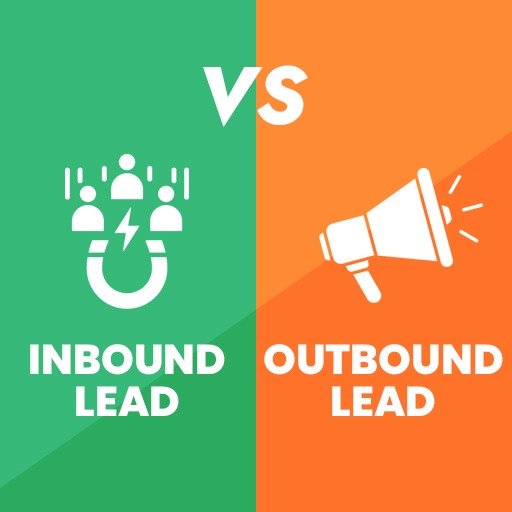
Inbound vs Outbound Leads: Which Is Best For You?

Choosing between inbound and outbound leads can make or break your growth. Here’s what actually works and what drives real results.
Author
outservepro@gmail.com
Category
Sales, Marketing
Table of Contents
Introduction
Every business eventually asks the same question. Should we wait for the right customers to find us, or should we go out and find them first? That single decision shapes budgets, timelines, and how fast a company actually grows. It is also one of the most misunderstood choices in marketing, because most people treat it as a competition instead of a strategy.
Inbound and outbound lead generation are not rivals. They are two different tools built for two different jobs. The businesses that grow fastest are not the ones that pick a side. They are the ones that understand exactly when to use which.
Two Different Ways to Win a Customer
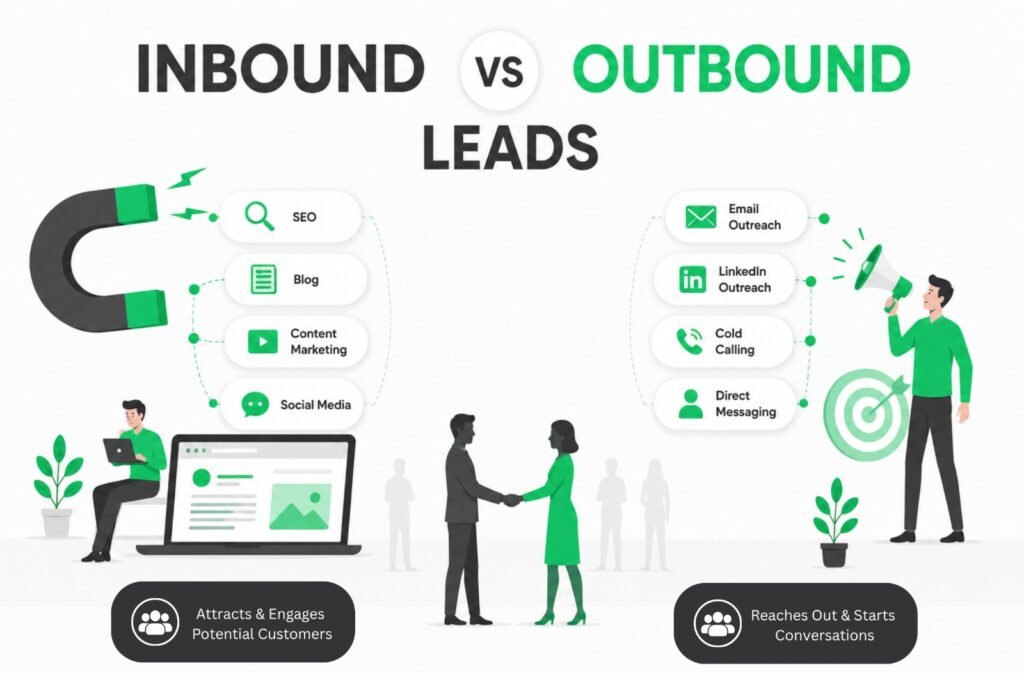
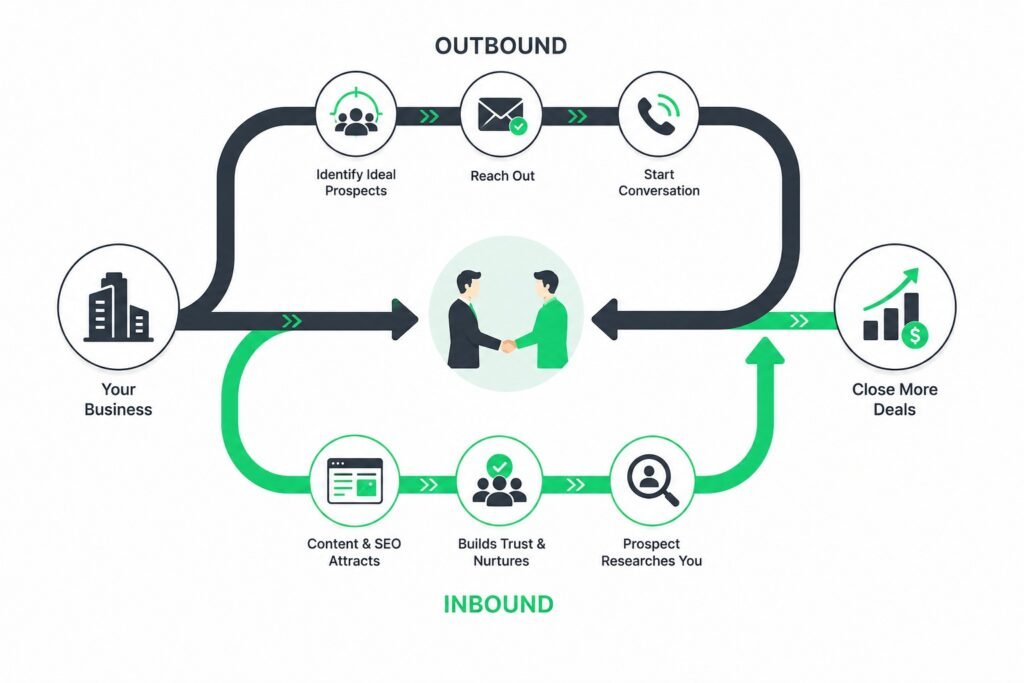
Inbound lead generation is about being found. Someone has a problem, they search for a solution, and they land on your website, your blog, or your ad because it answers their question. Search engine optimization, content marketing, and paid search all live here. The person is already looking. Your job is simply to be the answer they find.
Outbound lead generation flips the direction. Instead of waiting to be discovered, you go directly to the people who fit your ideal customer profile. Cold email, LinkedIn outreach, and targeted calling fall into this category. Nobody searched for you. You started the conversation.
Neither approach is better in isolation. They solve different problems, on different timelines, for different types of businesses.
What Inbound Leads Actually Look Like?
Inbound is a patient strategy that rewards consistency. A well optimized website, backed by search engine optimisation and helpful content, keeps attracting visitors long after the work is published. This is why SEO driven leads close at a rate of around 14.6%, compared to just 1.7% for cold outbound tactics. The people arriving through inbound channels have already raised their hand. They typed the question. They are not being interrupted, they are being helped.
Cost tells a similar story. B2B inbound leads average around $205, while outbound leads average closer to $450. The catch is time. Most inbound programs take three to six months before they produce meaningful pipeline, because search rankings and audience trust are built gradually, not overnight.
What Outbound Leads Actually Look Like?
Outbound trades patience for speed. If a business needs pipeline this quarter, not next year, outbound is usually the fastest way to get there. A sharp list, a relevant message, and consistent follow up can produce real conversations within days.
The average cold email reply rate now sits around 5% to 6%, which sounds modest until you consider that outbound sourced deals tend to run roughly 50% larger than inbound deals on average. Outbound also works especially well when the target audience is narrow. If you are trying to reach the finance directors of mid sized manufacturing companies, you are not going to wait for them to stumble onto a blog post. You go find them.
The Numbers Side by Side
Seeing the two approaches next to each other makes the trade offs much clearer.
- Close rate: Inbound (SEO driven) leads close at roughly 6%. Outbound leads close at around 1.7%.
- Cost per lead: Inbound averages roughly $205. Outbound averages closer to $450.
- Speed to first result: Outbound can produce conversations within days. Inbound typically needs three to six months to build momentum.
- Deal size: Outbound sourced deals tend to run about 50% larger on average, since outbound often targets specific, higher value accounts directly.
- Lead quality perception: A majority of marketers rate inbound leads as higher quality, largely because the buyer already showed intent before ever speaking to sales.
None of these numbers make one approach objectively superior. They simply describe what each channel is naturally good at, which is exactly why the decision should be based on your business, not on which statistic sounds more impressive.
Choosing the Right Strategy at the Right Time
The honest answer to “Right Strategy at the Right Time” depends on three things.
- How fast you need results? Outbound wins if you need conversations this month. Inbound wins if you are building something that compounds over the next year.
- How big your target market is? A broad audience favours inbound, since content and search can reach thousands of people at once. A narrow, high value audience favours outbound, since you can reach exactly the right person directly.
- What your product is worth? Higher ticket B2B services can absorb the higher cost per lead that outbound carries, because one closed deal covers the investment many times over.
There is no universal winner because there is no universal business. A local service company and an enterprise software provider will almost never land on the same answer.
Why Most Growing Businesses Use Both?
The companies pulling ahead in 2026 are not choosing sides. They are combining channels deliberately. Outbound creates the spark, opening conversations with accounts that were never going to find you organically. Inbound content and social media then do the work of building trust while that prospect is deciding whether to buy.
This is where most businesses run into trouble. Running one channel well is hard enough. Running both, with the right message, the right timing, and the discipline to follow up five or six times before giving up, is a different level of effort entirely. Most internal teams are already stretched thin managing day to day operations, which is exactly why so many businesses eventually bring in a partner who does this full time.
A digital marketing agency that understands both sides can build inbound assets that compound over months while running outbound campaigns that fill the gap in the meantime, so growth never depends entirely on one channel catching up.
Paid Channels Can Speed Up Either Approach
Google Ads and Meta Ads sit in an interesting middle ground. They are technically inbound, since they capture people who are already searching or scrolling, but they behave with the speed of outbound because results show up almost immediately once campaigns go live.
For businesses that need faster proof a channel works before committing fully to organic content, paid campaigns are often the quickest way to test demand.
Social Channels Blur the Line Between the Two
Platforms like LinkedIn and TikTok make the inbound versus outbound conversation more interesting. LinkedIn already drives around 80% of B2B leads that come through social media, largely because organic posts function as inbound content while direct outreach on the same platform behaves like outbound. TikTok is a newer addition to this mix, but a large share of users who discover a business there go on to visit that business’s website separately, which is a fairly inbound style outcome from what started as a scroll stopping outbound style ad.
The lesson is that channels do not always fall neatly into one category. What matters is whether the content earns attention or interrupts it, and increasingly, the best performing campaigns do a bit of both.
Signs You Are Leaning the Wrong Way
A few patterns tend to show up when a business has picked the wrong mix. If your sales team is constantly chasing leads that never respond, your outbound targeting is probably too broad. If your website gets steady traffic but almost nobody fills out a form, your inbound content is attracting the wrong audience or your offer is not clear enough.
If you have plenty of leads but very few of them turn into real conversations, the issue usually is not the channel at all. It is qualification, meaning nobody is filtering out the people who were never going to buy.
61% of marketers say generating high quality leads, not just more leads, is their single biggest challenge right now. That number alone explains why so many businesses eventually stop trying to fix this internally and hand the strategy, targeting, and execution to a team that does it daily.
Frequently Asked Questions
Is inbound or outbound better for a new business?
Outbound usually produces faster initial conversations, since there is no traffic or ranking to build first. Inbound becomes more valuable once the business has content and search visibility in place, because it keeps generating leads without ongoing manual effort.
How long does it take to see results from inbound lead generation?
Most businesses start seeing meaningful traffic and leads within three to six months, depending on competition in their industry and how consistently content is published.
Does outbound lead generation still work in 2026?
Yes, though untargeted mass outreach performs poorly. Outbound works best when the list is well researched, the message is specific to the recipient, and follow up happens consistently rather than after a single attempt.
Can a small business afford both inbound and outbound at the same time?
Many small businesses start with one channel and add the second once the first is generating consistent results. The right starting point usually depends on how quickly the business needs new customers.
What is the biggest mistake businesses make when choosing between the two?
Treating it as a permanent decision. The right mix changes as a business grows, as competition shifts, and as budgets change. Reviewing the strategy every few months matters more than getting it perfect on day one.
Share this post: